
How the Under-Eye Area Ages
Here is why and how the area underneath our eyes ages differently, and what actually helps.

.jpg)
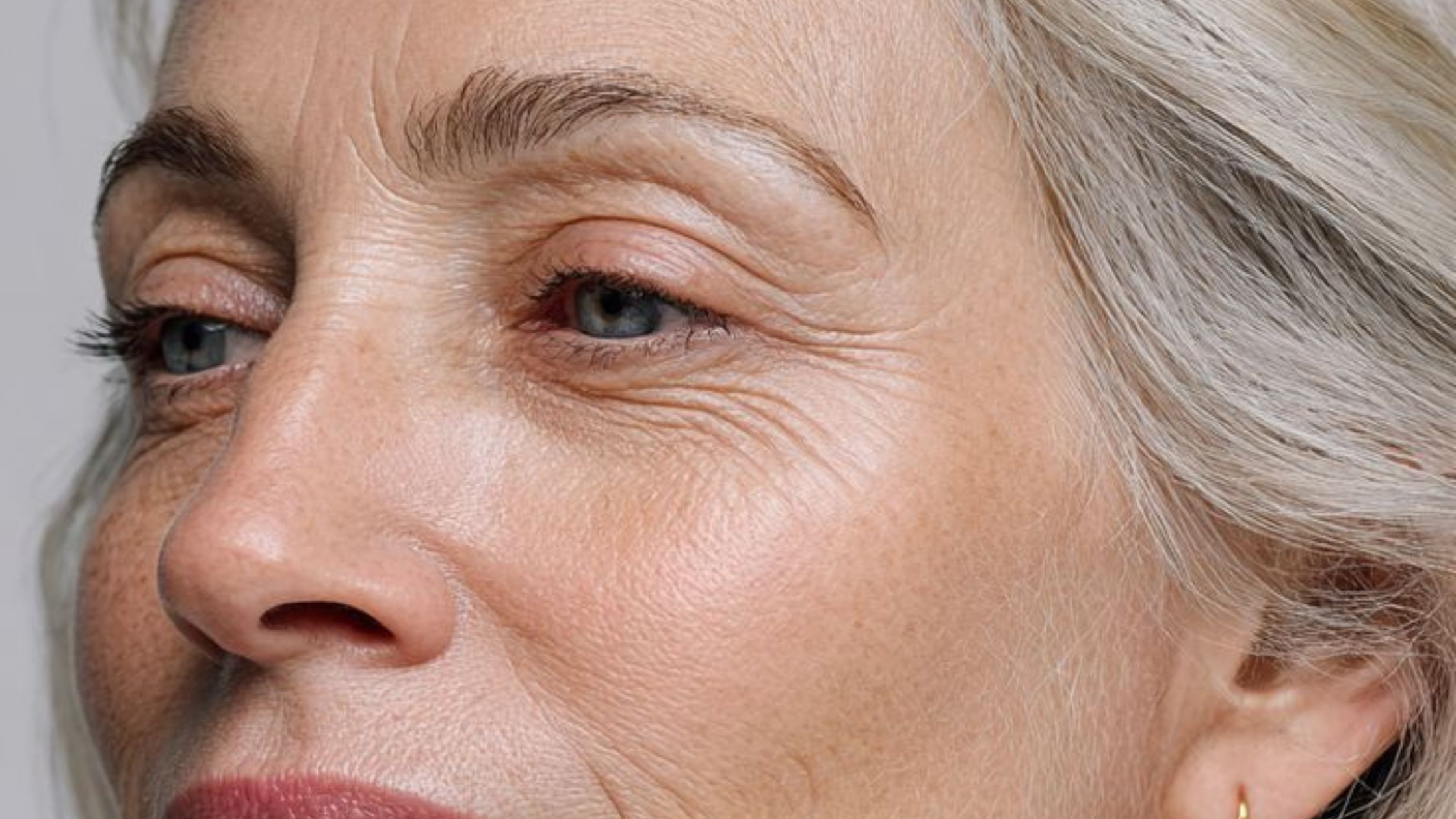
The skin underneath our eyes is 0.3 to 0.5 mm thin. This compares to the rest of our face with roughly 2 mm. That four-to-sixfold difference explains why fine lines appear here first, why dark circles persist, and why eye creams rarely deliver what they promise.
Some of us have noticed: whatever we try, our under-eye area does not seem to respond. The reason: This zone plays by different biological rules.
1. Why the Under-Eye Area Ages Differently

5 anatomical factors make the periorbital zone uniquely vulnerable:
1 - Thickness. At 0.3 to 0.5 mm, this skin has a fraction of the structural support found elsewhere on the face. Collagen loss becomes visible here earlier than anywhere else.
2 - Fewer oil glands. The under-eye area has almost no sebaceous glands. That means a naturally weaker moisture barrier.
3 - Minimal fat cushion. Very little subcutaneous fat sits between the skin and the underlying structures. There is no buffer against UV exposure or environmental stress.
4 - Constant movement. You blink 15 to 20 times per minute. Over a day, that adds up to roughly 15,000 mechanical contractions on the thinnest skin on your face.
5 - Fat and bone loss. Fat loss is the primary driver of under-eye hollowing, and the orbital bone also gradually recedes. Together, these structural changes create the hollowing beneath the eye that no topical product can reach.
2. What Causes Dark Circles
Most people assume dark circles have one cause. In reality, there are three distinct types. Each looks different, has a different origin, and requires a different approach.
Identifying the type before choosing an intervention is the approach that works.
3. Why Most Eye Creams Disappoint
Here is an honest take: the vast majority of people do not need a dedicated eye cream. A regular minimalist skincare routine has the periorbital area covered. SPF in the morning. Gentle cleansing. The 2-3 actives that really matter.
A dedicated eye product makes sense in one specific scenario: temporary lightening or de-puffing of dark circles. Caffeine at 2 to 5% can temporarily constrict blood vessels, reducing puffiness for a few hours. That is a real, if a modest effect.
What does not work: expecting a cream to address structural hollowing, significant pigmentation, or advanced collagen loss. The anatomy of this zone makes it nearly impossible for topical ingredients to deliver meaningful structural change. The skin is too thin, the causes often lie too deep.
One note on retinoids in this area: while there is good evidence that it reduces fine lines also here, the skin also tolerates far less. Retinoids can further dry out already-dry skin in this zone.
If you do use retinoids in the area around your eyes and, keep the concentration low and apply sparingly with your ring finger.
Avoid: heavy occlusive creams and high-concentration actives. The risk of milia (small keratin cysts under thin skin) increases significantly.
4. What Actually Makes a Difference
When topicals reach their limit, professional treatments can address what happens beneath the surface. The right option depends on the underlying cause identified during a skin analysis.
Platelet-Rich Fibrin (PRF) uses concentrated growth factors from our own blood. These antiinflammatory substances reduce inflammation (inflammaging), release exosomes that signal tissue repair, and stimulate fibroblasts to rebuild collagen. Downtime is minimal. Results build gradually over weeks."
Polynucleotides are DNA fragments that signal fibroblasts to produce more collagen and improve hydration. They work well for fine lines, crepey texture, and overall skin quality in the periorbital zone.
For deeper structural concerns caused by significant volume loss, alternative options may exist. This is always highly individual and requires a conversation with your doctor.
5. Key insights
The under-eye area ages faster by anatomy. Most eye creams cannot address the cause, because the cause usually lies deeper than any topical can reach.
At home: your regular routine is enough for most people. SPF, gentle cleansing, a good moisturizer.
Professionally: PRF and Polynucleotides may be able to address what topicals cannot.
Sources:
Goldman, A.; Goldust, M.; Wollina, U. Periorbital Hyperpigmentation—Dark Circles under the Eyes; Treatment Suggestions and Combining Procedures. Cosmetics 2021, 8, 26. https://doi.org/10.3390/cosmetics8020026
Vrcek, Ivan; Ozgur, Omar; Nakra, Tanuj. Infraorbital Dark Circles: A Review of the Pathogenesis, Evaluation and Treatment. Journal of Cutaneous and Aesthetic Surgery 9(2):65-72, Apr–Jun 2016. https://doi.org/10.4103/0974-2077.184046
Kołodziejczak, A., & Rotsztejn, H. (2024). The Impact of Carboxytherapy and Treatments Combining Carboxytherapy and Selected Chemical Peels on Vascular and Pigmentary Components of the Dark Circles. Clinical, Cosmetic and Investigational Dermatology, 17, 1875–1885. https://doi.org/10.2147/CCID.S469708
Hamie, Hanin B.; Yassine, Reem B.; Shoukfeh, Rajaa B.; Turk, Dilara M.; Huq, Farhan M.; Moossavi, Meena M. A Review of the Efficacy of Popular Eye Cream Ingredients. International Journal of Women’s Dermatology 10(2):e156, June 2024. https://doi.org/10.1097/JW9.0000000000000156
Aldag, C.; Nogueira Teixeira, D.; & Leventhal, P. S. (2016). Skin Rejuvenation Using Cosmetic Products Containing Growth Factors, Cytokines, and Matrikines: A Review of the Literature. Clinical, Cosmetic and Investigational Dermatology, 9, 411–419. https://doi.org/10.2147/CCID.S116158


.jpg)
.jpg)
.jpg)
.jpg)
.jpg)
.jpg)
.jpg)
.jpg)
.jpg)
.jpg)
.jpg)
.jpg)

.jpg)
.jpg)
.jpg)