
Skin Longevity at 2000 Meters’ Altitude
Heading to the mountains this winter? Whether it is skiing in St. Moritz or snowshoeing in the Engadin, your skin faces unique challenges at altitude. Here is what you need to know – and what to do about it before, during, and after your trip.

.jpg)
Why the Mountains Are Tough on Your Skin
Three factors make mountain environments particularly demanding for your skin:
1. UV Radiation Increases with Altitude
UV radiation increases by 10-12% for every 1,000 meters. At St. Moritz Dorf (1,846m), you are exposed to ~16% more UV than in Zurich. At Piz Nair (3,057m), that jumps to nearly 30%.
This is not just about sunburn. UV drives long-term photoaging through DNA damage and collagen breakdown.
2. Snow Reflects Up to 80% of UV
Fresh snow reflects up to 80% of UV – compared to 10-20% for gravel. You are getting hit from above and below. Even on cloudy days, 80% of UV penetrates through.
3. Cold and Wind Disrupt Your Skin Barrier
Cold air holds less moisture. Add wind, and your skin's barrier function weakens, leading to dryness, irritation, and increased UV vulnerability.
What to Do: Before, During, and After
Here is how to protect your skin before, during, and after your mountain trip.
Before:
Start strengthening your skin a few days before your trip:
- Prep your barrier with a moisturizer that contains ceramides and/ or niacinamide (Vitamin B3).
- Skip mechanical exfoliants from 3 days before departure. If you exfoliate, choose gentle chemical exfoliants like AHA or BHA instead.
- Pack smart: Carry travel sizes of an SPF 50+, a rich moisturizer, as well as an SPF lip balm with you on the piste or hike.
During:
While in the mountains:
1. Apply SPF 50+ Every Morning, Reapply Every 2 Hours
Apply generously to face, neck, ears, hands, and lips. Reapply frequently, especially after sweating or removing your helmet.
2. Cover Up
Helmet (if skiing), goggles or large sunglasses, neck warmer. Physical protection can be just as important as sunscreen.
3. Hydrate your Skin Overnight
Dry hotel air is common in the mountains. Before bed, apply a nourishing night cream or overnight mask. Drink plenty of water throughout the day. A glass on the nightstand doesn't hurt either.
After:
Back from the mountains? Now is the time to give your skin a little extra care.
- Soothe and repair with a panthenol, centella, or hyaluronic acid cream to restore hydration and calm irritation.
- Resume your retinoid routine after 2-3 days to support collagen production and cell turnover.
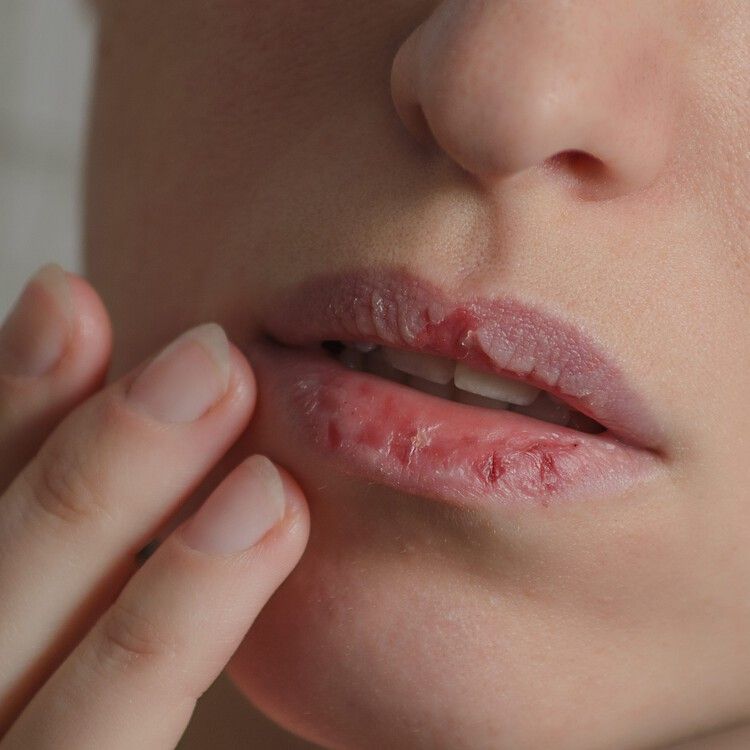
Dry Lips at Altitude
Dry, chapped lips are one of the most common complaints after a mountain trip. Here is why – and what to do about it.
Why Lips Are Especially Vulnerable
The skin on your lips is thinner than the rest of your face and lacks sebaceous glands, which means it cannot produce its own protective oils. At altitude, three factors make this worse:
Low humidity: Cold air holds less moisture, increasing transepidermal water loss (TEWL).
UV exposure: Lips are often forgotten during sunscreen application, leaving them vulnerable to UV damage.
Wind: Wind accelerates water evaporation from the lip surface, disrupting the barrier.
The result? Dry, cracked, and sometimes painful lips.
What Not to Do: Stop Licking Your Lips
It is tempting to lick your lips when they feel dry. But saliva evaporates quickly, leaving your lips even drier than before. The enzymes in saliva can also irritate the delicate lip skin, worsening the problem.
What to Do Instead: A Two-Step Approach
The most effective strategy for dry lips combines hydration and occlusion.
Step 1: Hydrate with Hyaluronic Acid
Hyaluronic acid is a humectant that attracts and binds water to the skin. Applied to the lips, it helps plump dry, flattened tissue and prevents moisture loss.
How to use: Apply a hyaluronic acid serum or lip treatment to clean, slightly damp lips. This allows the hyaluronic acid to draw moisture into the lip tissue.
Step 2: Seal with an Occlusive
Occlusives create a physical barrier on the skin surface, preventing water from evaporating. Research shows that highly occlusive formulations significantly improve lip roughness, wrinkles, and hydration.
Best occlusives for lips:
• Vaseline (petrolatum): It reduces TEWL by up to 98%.
• Lanolin: Highly occlusive and emollient, but avoid if you have a wool allergy.
• Shea butter or beeswax: Natural alternatives, though slightly less occlusive than petrolatum.
How to use: After applying hyaluronic acid, seal it in with a thick layer of Vaseline or another occlusive. This is especially important at night, when TEWL is highest.
During the Day: SPF Lip Balm
During the day, use an SPF 30+ lip balm. Reapply every 2 hours, especially after eating or drinking. Look for formulations that combine sun protection with occlusive ingredients (e.g., SPF + petrolatum or shea butter).
The Bottom Line
The mountains are beautiful – but tough on your skin.
The good news? Your skin can thrive in the mountains – if you treat it like what it is: a living system worth protecting.
And when you come back, we are here to help it regenerate.
In case you go, stay safe and have a great trip!
.jpg)
.jpg)
.jpg)
.jpg)
.jpg)
.jpg)
.jpg)
.jpg)
.jpg)
.jpg)
.jpg)
.jpg)
.jpg)

.jpg)
.jpg)