
Photoaging: Why Up to 80% of Visible Aging Is Preventable
The fine lines, the pigmentation, the loss of firmness most people credit to age. The research points elsewhere.

.jpg)
Here is something worth knowing: up to 80% of visible facial aging is not caused by time. It is caused by sunlight.
This type of aging has a name: Photoaging. It describes the structural changes in the skin driven by light exposure: wrinkles, pigmentation, loss of elasticity. However, most of these are not inevitable. They are the result of cumulative damage that starts much earlier than most people expect.
The empowering part: because this damage is externally driven, it is largely preventable and to an extent, reversible.
1. The Skin Exposome: Extrinsic vs. Intrinsic Aging
Our skin ages through two parallel processes.
Intrinsic aging is genetic, hormonal, and time-driven. Collagen production gradually slows, the skin becomes thinner, cell turnover decreases. This happens to everyone, regardless of lifestyle.
Extrinsic aging is driven by external factors, collectively known as the skin exposome (a concept developed by Krutmann and colleagues to describe the sum of environmental exposures that shape how skin ages). This includes UV radiation, pollution, smoking, nutrition, chronic stress, and reduced sleep quality. Together, these factors account for the majority of visible skin aging.
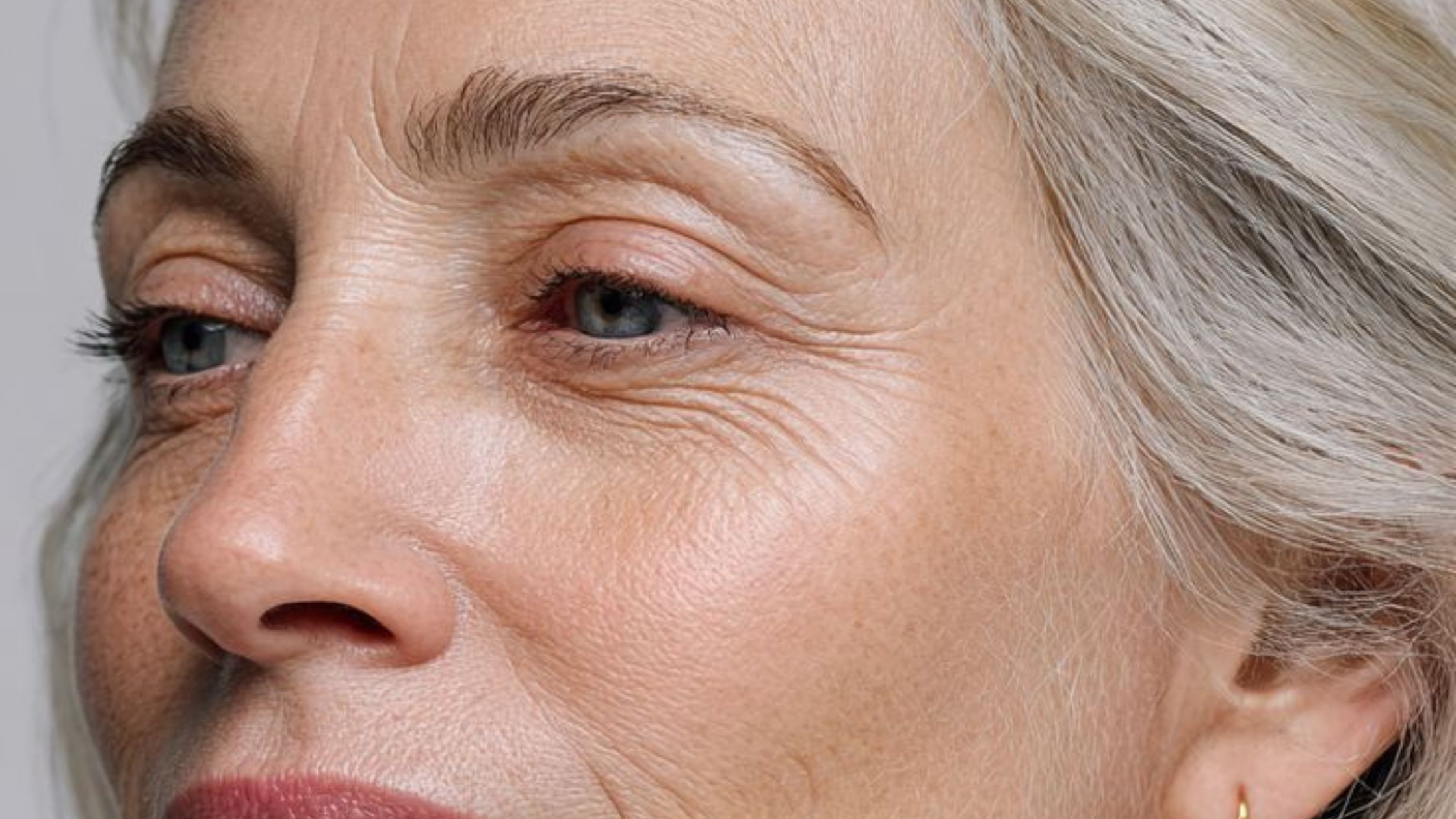
Photoaging, the cumulative damage caused by chronic sunlight exposure, is the single largest contributor within the exposome. It is responsible for the fine lines around the eyes, the unwanted hyperpigmentation, and the loss of firmness that most people quietly attribute to "getting older." These changes are usually accumulated light damage, not calendar age. Unlike intrinsic aging, photoaging is modifiable.
This distinction matters because it determines what you can do about it. You cannot negotiate with your chronological age. You can negotiate with your exposome.
2. The Full Light Spectrum
UV radiation is the part of sunlight most people think about. It is only part of the picture.
UVB (280 to 320 nm) makes up approximately 20% of the UV radiation reaching the skin. It damages DNA directly in the outer skin layer and is the primary driver of sunburn and skin cancer risk. An easy way to remember: UVB = Burn.
UVA (320 to 400 nm) accounts for roughly 80%. It penetrates deeper, reaching the dermis, where collagen lives. UVA drives the silent, cumulative structural aging that shows up years later. UVA = Aging.
What makes UVA particularly relevant: it is always present when there is daylight. Through the office window. In the tram. On a cloudy Tuesday in Zurich. UVA does not need direct sun exposure to reach the skin.
Visible light (400 to 700 nm) and infrared radiation amplify collagen-degrading pathways together with UV and contribute to pigmentation across all skin types. This is why full-spectrum protection goes beyond conventional SPF.

3. How Light Breaks Down Collagen
The damage works on 2 levels simultaneously.
UVA generates unstable molecules called reactive oxygen species (ROS). These activate specific enzymes (MMPs) that break down collagen and elastin. At the same time, UVA triggers the death of fibroblasts, the very cells that produce new collagen. The skin loses structure while losing its ability to rebuild.
UVB causes direct DNA damage in skin cells, activating additional collagen-degrading pathways independently of oxidative stress.
The combined effect: even moderate UV exposure can shut down new collagen production for up to 24 hours. Collagen is being broken down while its production pauses. Over time, repeated exposure leads to cumulative damage and chronic low-grade inflammation – a process researchers call inflammaging, the same pathway accelerated by poor sleep and chronic stress.

4. What You Can Do: Full-Spectrum Protection
Photoaging is multi-layered. This is why effective protection works on several levels.
Avoid. Physical sun behaviour comes before any product. Seeking shade during peak UV hours, wearing a wide-brimmed hat, choosing UV-protective clothing, and not deliberately exposing skin to midday sun outdo any sunscreen formulation. Physical protection is the single most underrated layer in modern skincare conversations, and the one with the deepest evidence base.
Protect. Broad-spectrum SPF 50+ every morning, regardless of weather. This is your daily chemical and mineral shield against UVA and UVB. In the landmark randomised controlled trial on daily sunscreen (Hughes et al., Annals of Internal Medicine, 2013, n=903), daily broad-spectrum users showed 24% less visible skin aging over 4.5 years than discretionary users. No over-the-counter intervention in dermatology has a better evidence-to-cost ratio.
Neutralise. A stable topical antioxidant (vitamin C is the best-studied; vitamin E and ferulic acid are frequently combined) applied under SPF adds a biochemical safety net. Antioxidants neutralise the free radicals generated by UVA, visible light, and infrared before they reach collagen structures. Think of it as extending your protection beyond what SPF alone can cover.
Repair. Where damage has already accumulated, evidence-based in-clinic treatments (RF Needling or Biostimulators) work at the depth topicals cannot reach. This is where existing photoaging can be meaningfully reversed: rebuilding collagen and elastin that years of light exposure have broken down.
Avoidance and protection slow the damage. Repair rebuilds what has already been lost. Together, they form the foundation of any coherent Skinspan strategy.
See where your skin stands today. Book your skin analysis at everskin here.
Sources:
- Krutmann J et al. The skin aging exposome. J Dermatol Sci. 2017;85(3):152–161.
- Fisher GJ et al. Mechanisms of photoaging and chronological skin aging. Arch Dermatol. 2002;138(11):1462–1470.
- Rittie L, Fisher GJ. Natural and sun-induced aging of human skin. Cold Spring Harb Perspect Med. 2015;5(1):a015370.
- Hughes MCB et al. Sunscreen and Prevention of Skin Aging: A Randomized Trial. Ann Intern Med. 2013;158:781–790.
- Singer S. Unilateral Dermatoheliosis. N Engl J Med. 2012;366(16):e25.
- Mamalis A, Jagdeo J. The Combination of Resveratrol and High-Fluence Light Emitting Diode-Red Light Produces Synergistic Photobotanical Inhibition of Fibroblast Proliferation and Collagen Synthesis. J Drugs Dermatol. 2015.
- Liebel F et al. Irradiation of skin with visible light induces reactive oxygen species and matrix-degrading enzymes. J Invest Dermatol. 2012;132(7):1901–1907.
- Randhawa M et al. Visible light induces melanogenesis in human skin through a photoadaptive response. PLoS One. 2015;10(6):e0130949.
- Franceschi C et al. Inflamm-aging. An evolutionary perspective on immunosenescence. Ann N Y Acad Sci. 2000;908:244–254.
- Uitto J. Understanding premature skin aging. N Engl J Med. 1997;337(20):1463–1465.
- Flament F et al. Effect of the sun on visible clinical signs of aging in Caucasian skin. Clin Cosmet Investig Dermatol. 2013;6:221–232.
.jpg)
.jpg)
.jpg)
.jpg)
.jpg)
.jpg)
.jpg)
.jpg)
.jpg)
.jpg)
.jpg)
.jpg)

.jpg)
.jpg)
.jpg)